— V · Materials & Process
Wood, brass, leather, and a great deal of patience.
A Dechamel board is six materials and seven stages of work. Each is chosen for how it ages, not how it photographs.
- Materials
- 6
- Stages
- VII
- Coats of oil
- 6 + 1
- Joinery
- Splined
— Materials, by hand
VI
Walnut
Juglans regia
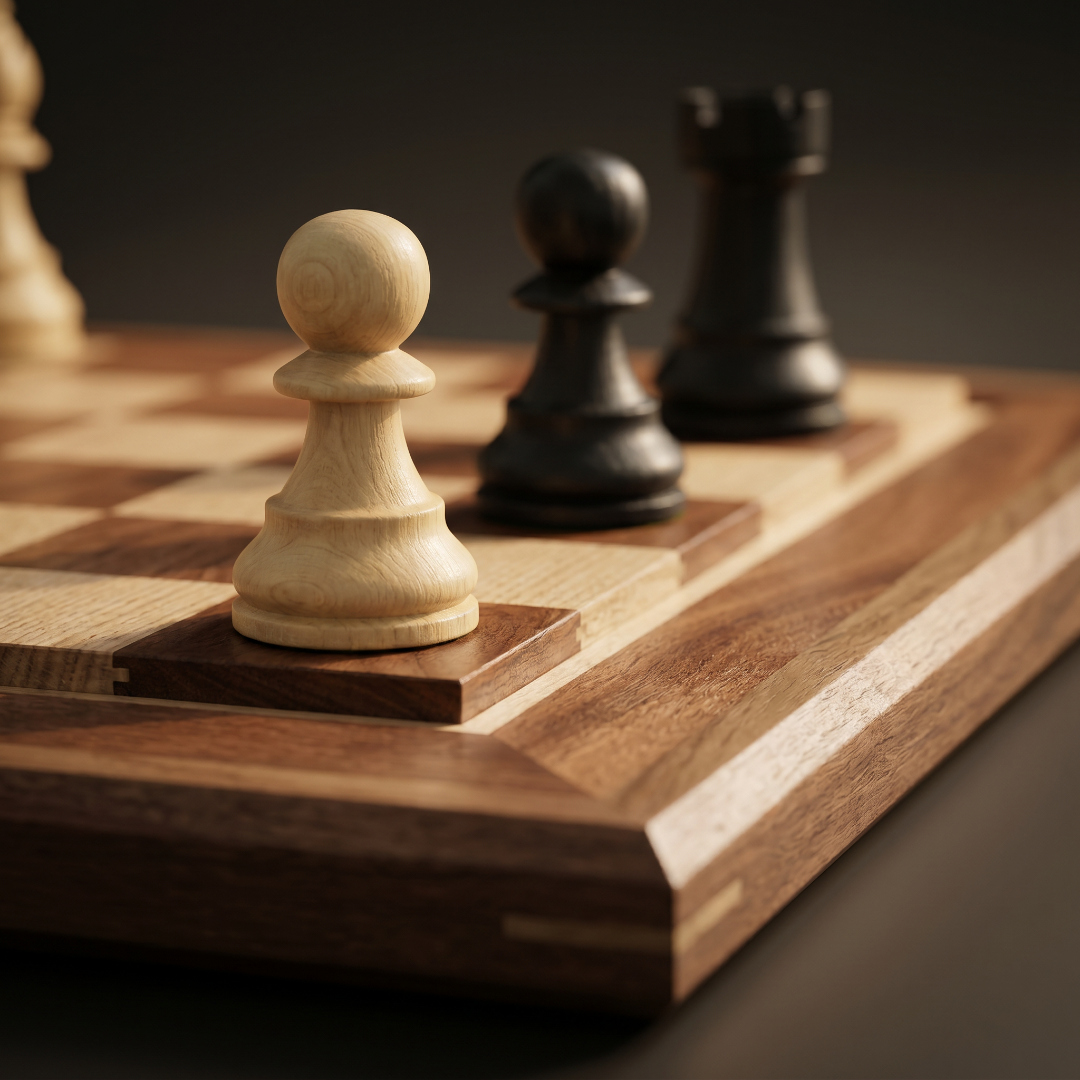
European walnut, quartersawn for stability and figure. Rested for two winters in the loft — alongside sapele and mahogany — before any cut.
Oak
Quercus robur
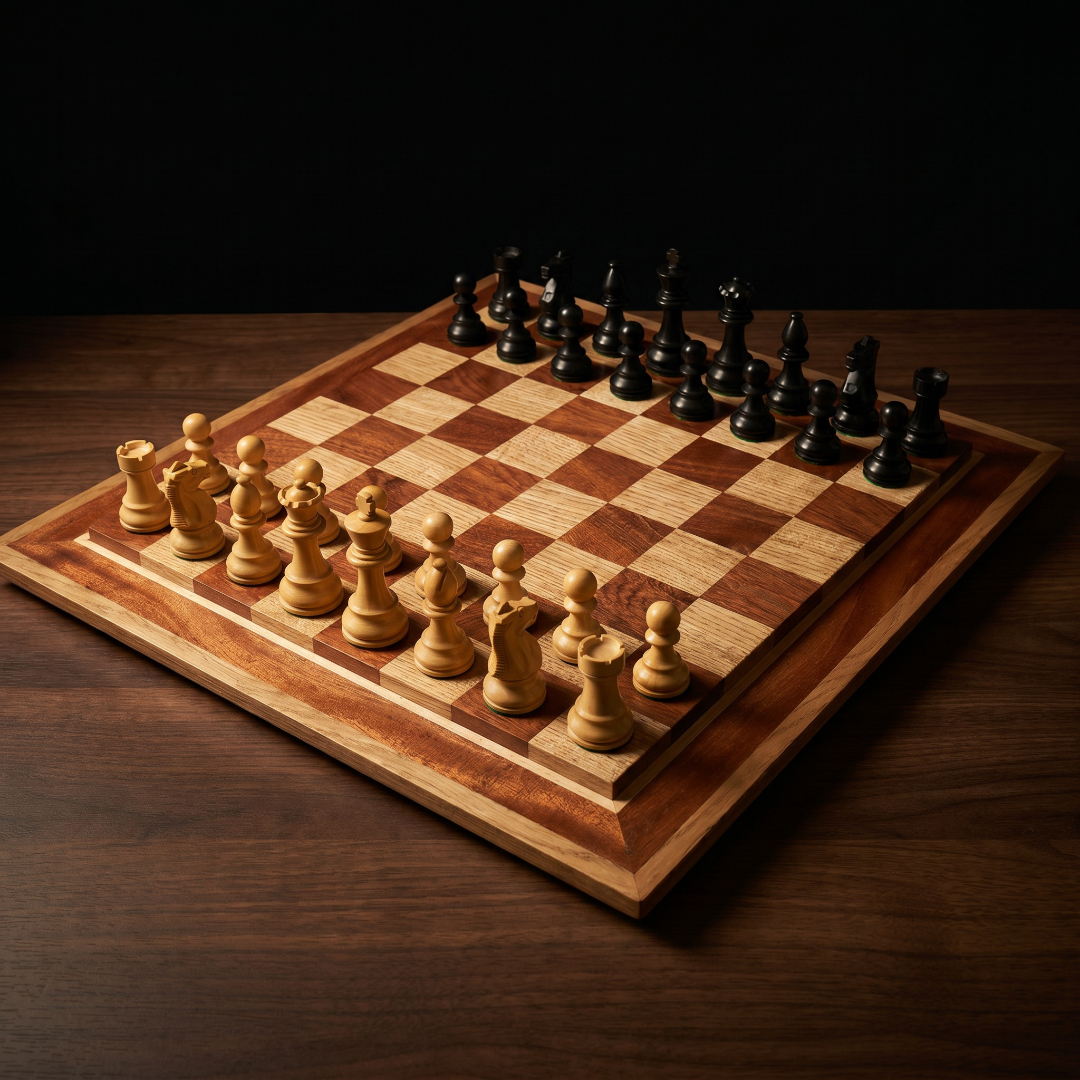
European oak, slow-fumed in ammonia for nine days until the tannins deepen the heartwood to a warm coffee.
Maple
Acer pseudoplatanus
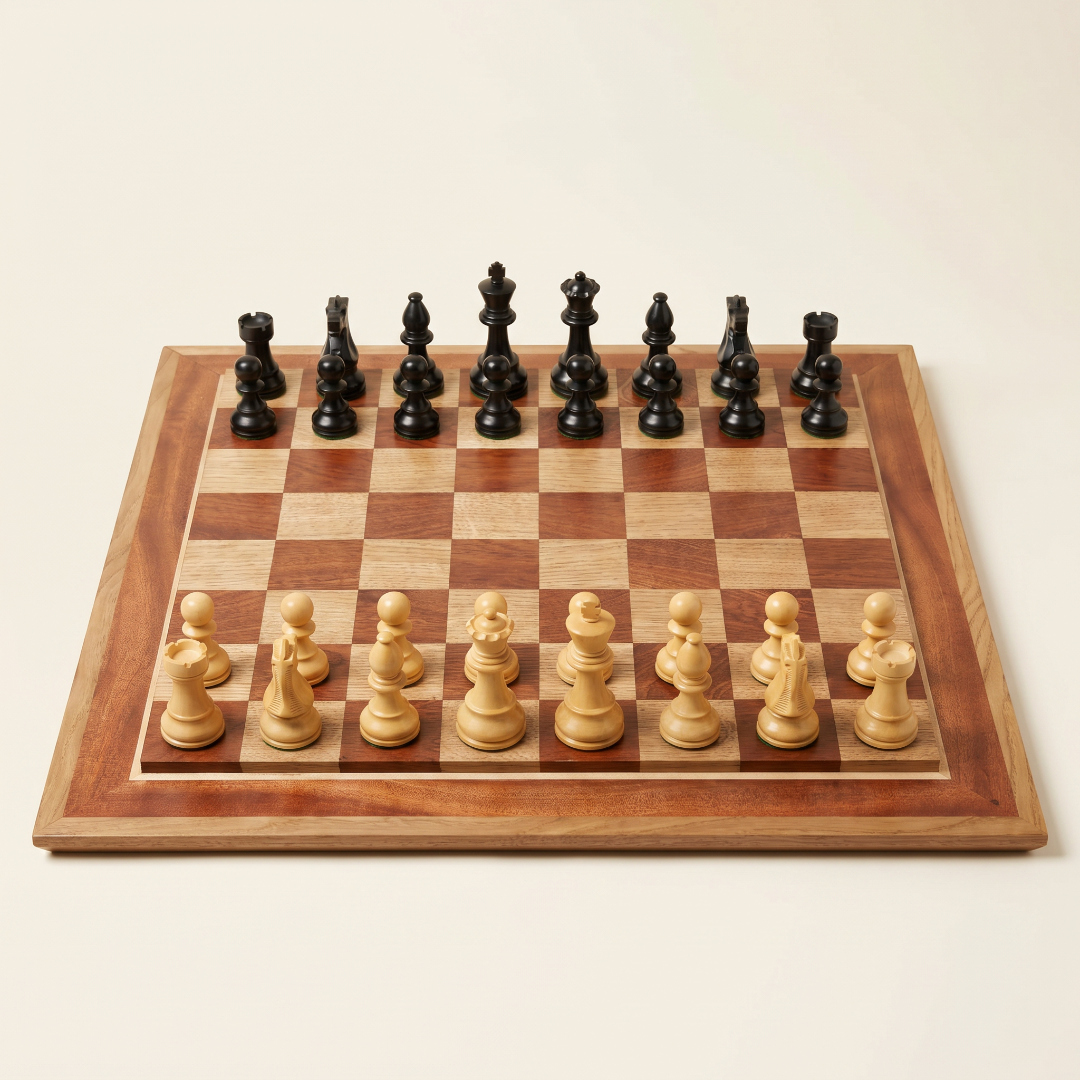
Sycamore maple, chosen for its closed grain and quiet, even ivory. Used for frames and the lighter squares where contrast is required.
Brass
Cu 65 / Zn 35
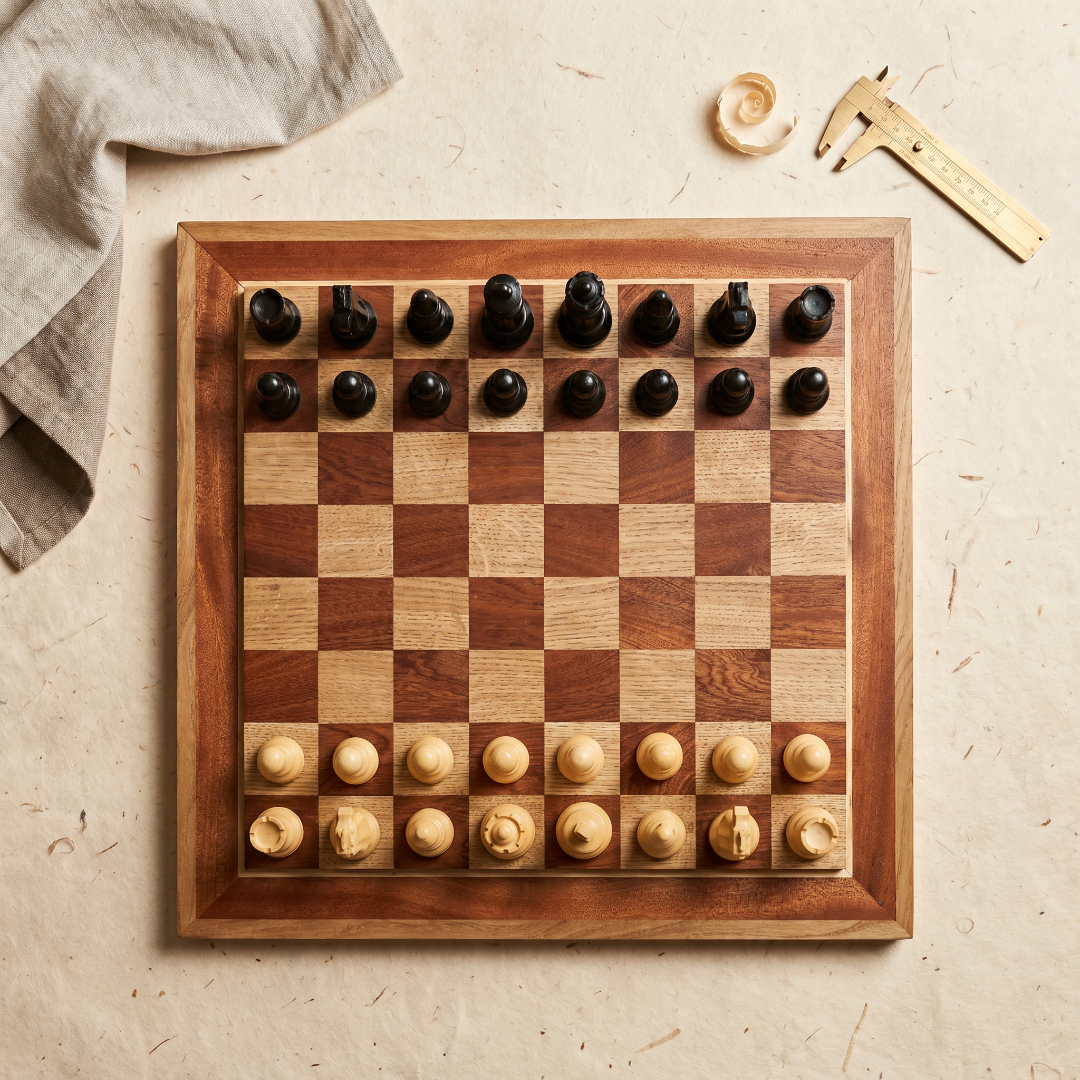
Sand-cast at a small foundry to our drawing, then hand-filed and burnished. It darkens, slowly, into the board.
Leather
Saddle, full-grain
Vegetable-tanned saddle leather from a tannery on the Loire. Cut to the rim, stitched by hand, blind-embossed.
Oil
Aleurites fordii
Pure tung oil, applied in six thin coats, hand-rubbed between each. It cures into the wood — never on top of it.
— Seven stages
The rhythm of the atelier.
I.
Stage
Selection
A billet is chosen at the mill in winter, when the grain reads quietest.
II.
Stage
Resting
Stock is stickered in the loft for two winters, sometimes four for tournament editions.
III.
Stage
Resawing
Squares are cut from a single billet so the figure runs continuously across the face.
IV.
Stage
Fitting
Mitres are sawn, splined, pegged. Every joint is dry-fitted twice before any glue is mixed.
V.
Stage
Inlay
The knight medallion is cast, filed and seated into the underside. Brass corners are pinned, not screwed.
VI.
Stage
Finish
Six coats of pure tung oil, hand-rubbed. The board rests a week before the seventh — a light wax.
VII.
Stage
Register
The board is numbered, signed and recorded by hand in the leather register.
— On tools
A bench, two planes, and time.
The workshop is small. There is a single bench, a low-angle jack plane that has been with the atelier since the first board, and a shooting board cut from the offcut of board No. 001. We prefer hand tools to machinery where the difference is felt — and machinery to hand tools where the difference is only romantic.